The Ultimate Guide to gallery‑dl Version Management
Maintaining a perfect media collection starts with keeping your primary engine in peak condition. Since sites update their code regularly, a regular update cycle is essential for any serious data hoarder who needs to keep upgrading gallery-dl up to date to stay ahead of the curve.
If you don’t update properly, your favorite site scrapers might suddenly stop working or throw errors. Staying current ensures that your software setup remains powerful and capable of handling the newest web standards and API changes.
We are going to make sure your transition is completely safe and doesn’t wipe out your hard-earned settings. By following this template guide, you will have a high-performance system that stays efficient every time you upgrade gallery-dl to a newer version.
What are the best practices for upgrading without data loss?
The smartest way to handle any software change is to assume something might go wrong and prepare for it. Professionals never hit the upgrade button without first backing up their databases and configurations.
These best practices ensure that even if a new version changes a feature, you can roll back quickly. It is about creating a safety net for your data, so your hard work is never at risk.
By treating your setup with this level of care, you turn a stressful update into a routine task. You can move forward with total confidence, knowing your digital library is shielded from any technical bugs.
Securing Your JSON Configuration Files
Your configuration file is the brain of your operation, holding all your custom paths and login tokens. Before you run any update, copy your config file to a separate folder to keep it safe from accidental changes.
This ensures that even if the installer resets your settings, you can simply paste your old config back. It only takes a few seconds but saves you hours of re-typing complex commands and paths.
Verifying Python Environment Compatibility
As we move through 2026, newer versions of the tool may require updated Python runtimes to work. Always check that your system meets the minimum requirements to avoid “missing module” errors later.
Keeping your Python environment clean and up to date is the foundation of a stable scraping setup. A quick check of your version number before you upgrade gallery-dl will prevent most common gallery‑dl Installation Errors .
Seamless Installation: Moving to the Latest Stable Release
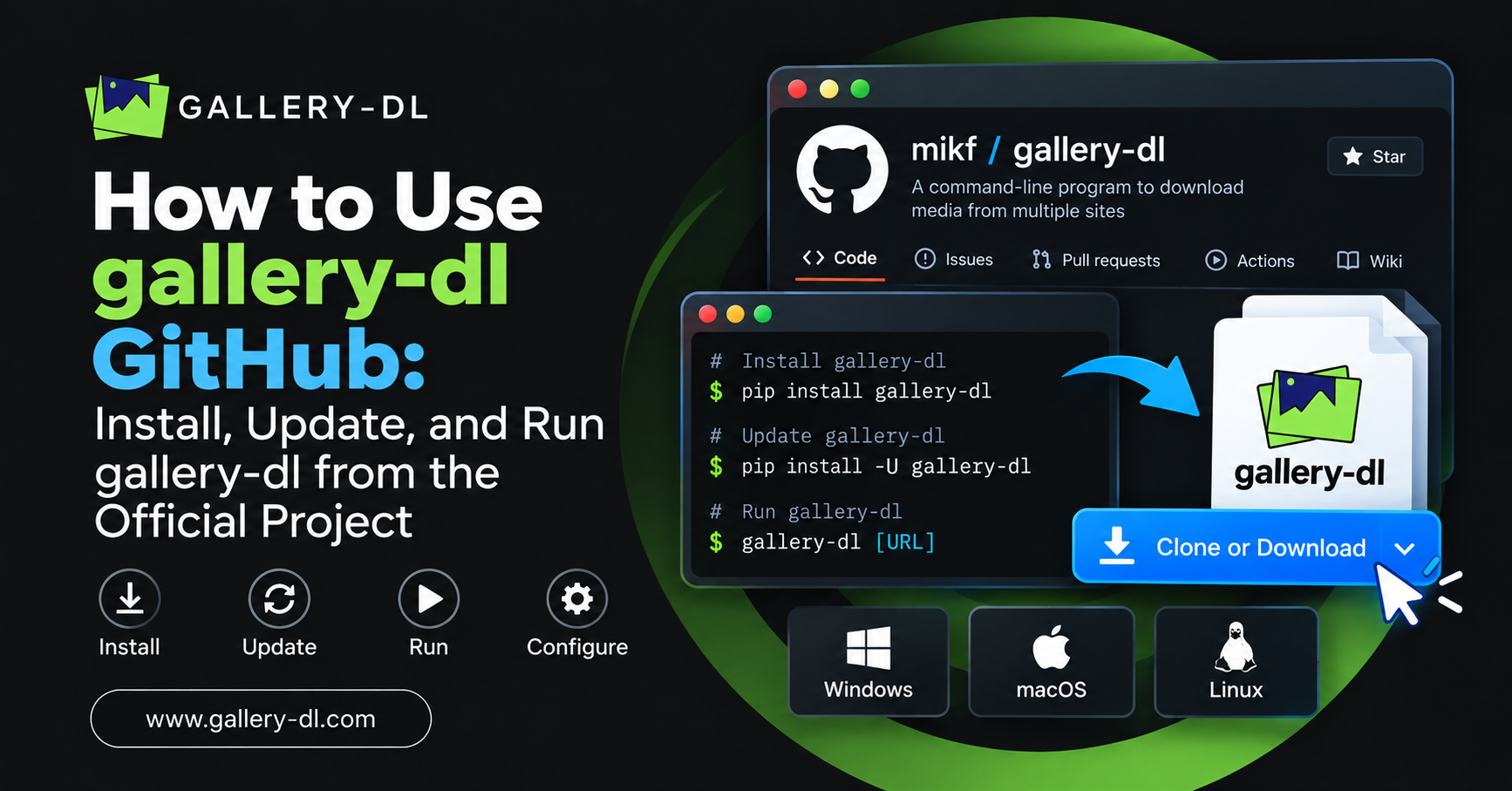
Updating to the newest build is very simple if you use the right commands for your specific computer. Whether you use Linux or Windows, there is usually a one-line fix to get your software up to date.
Using the official package managers ensures that all background files are handled automatically for you. This keeps your system clean and prevents old files from slowing down your scraping speed.
Upgrade Commands for Different Operating Systems
| Windows | Pip | pip install -U gallery-dl |
| macOS | Homebrew | brew upgrade gallery-dl |
| Linux | Snap | sudo snap refresh gallery-dl |
Handling Standalone Executable Updates on Windows Systems
If you use the portable .exe version, upgrading is as simple as replacing the old file with the new one. Just download the latest release from the official page and drop it into your main folder.
Make sure you rename the new file exactly like the old one so your scripts can find it easily. This keeps your shortcuts working and ensures your automation doesn’t miss a single beat when you upgrade gallery-dl.
Workflow Protection: Testing Scripts and Automation Hooks
If you use custom batch files to run your downloads, a version update can sometimes change how flags work. It is vital to test your most important commands right after the update finishes.
This proactive checking ensures that your automated server doesn’t wake up to a folder full of errors. It only takes a few minutes to verify that your commands are still being read correctly.
Key Areas to Check After Every Software Update
- Path Check: Ensure your downloads are still going to your external hard drive correctly.
- Site Test: Run a small download on a popular site to confirm the scraper is active.
- Log Check: Open your latest log file to see if any new warnings or errors appeared.
- Token Check: Verify that your login permissions are still valid for private galleries.
Identifying Deprecated Extractor Options and Syntax Changes
Occasionally, the developers clean up the code and rename certain options in the settings. Reading the official changelog helps you spot these changes before they cause a crash.
If an option no longer works, the new documentation will show you the modern way to write it. Keeping your syntax fresh is the best way to ensure long-term stability for your archiving.
Advanced Maintenance: Cleaning Cache and Session Cookies
Your utility may eventually accumulate temporary files that could interfere with a jump to a new version. After an upgrade gallery‑dl properly without breaking a brief maintenance sweep maintains your logs clean and your performance fast.
Cleaning your cookies is important if you frequently notice yourself being logged out of sites. A fresh session is often all you need to get back to full speed with your favorite platforms.
Common Post-Upgrade Troubleshooting Steps
| 403 Error | Old Cookies | Export fresh cookies.txt |
| Path Error | Config Reset | Restore JSON backup |
| Slow Speed | DNS Cache | Flush system DNS |
Re-authenticating OAuth Tokens for Sensitive Media Platforms
For sites that use special logins, your old tokens might occasionally expire during a major update. Re-running the login process ensures that your software has the proper permissions to access high-res files.
This keeps your private archives growing without interruption or missing data. It is a quick step that ensures you are always seen as a verified user by the platform’s servers after you upgrade gallery‑dl.
The Final Verdict: Building a Future-Proof Archiving System
A professional setup isn’t just about having the latest version; it’s about having a system that is easy to fix. By organizing your folders and keeping your scripts simple, you make every update a 10-second task.
To prevent site-wide blocks, the top archivers stay ahead of the game by routinely scanning for fresh patches. This guarantees that you will never lose access to the important items in your digital library.
Habits for a Perfect gallery‑dl Update Cycle
- Backup First: Always save a copy of your settings before typing any upgrade commands.
- Test Weekly: Run a manual check on your automated scripts to catch small bugs early.
- Read Changes: Spend a minute looking at the new release notes to see what was fixed.
- Keep it Clean: Delete old log files and temporary folders to keep your drive organized.
Monitoring GitHub Changelogs for Critical Security Patches
The developers often push small patches that fix critical errors or new site-wide security blocks. Keeping an eye on the official releases page ensures you are always using the most secure version.
This habit protects your system and ensures you get the fastest possible download speeds. It is the final piece of the puzzle for anyone serious about upgrading gallery‑dl correctly and efficiently.
Conclusion: Protecting Your Digital Legacy with Modern Tools
The key to a successful, long-lasting, and healthy media collection is to upgrade your equipment. We’ve covered everything you need to do to safeguard your workflow, from testing your scripts after upgrading gallery-dl to backing up JSON files.
By following this professional maintenance routine, you have transformed a simple scraper into a rock-solid archiving engine. A well-maintained system is the only way to stay ahead of the constant changes in the online world.
You now have the skills to handle any update cycle with total ease and precision. Go out there and keep your library growing with total confidence!
FAQs – Upgrading gallery-dl Without Breaking Workflow
1. How often should I upgrade gallery-dl?
Monthly or quarterly updates are recommended to ensure extractors remain compatible with sites like Reddit, Tumblr, and Pixiv.
2. Can I upgrade gallery-dl without losing my config.json settings?
Yes. Always back up config.json before upgrading. The file can then be restored if any changes overwrite your settings.
3. What if an upgrade breaks my automated Reddit or Tumblr downloads?
You can roll back to the previous version using:
pip install gallery-dl==<previous_version>
Always test automation scripts after an upgrade.
4. Do I need to upgrade Python to update gallery-dl?
Not always, but using Python 3.8+ ensures all new extractors and dependencies work correctly.
5. Should I update optional dependencies during gallery-dl upgrade?
Yes. Updating yt-dlp, certifi, and brotli ensures full multimedia support and prevents extractor failures.
6. Can I automate the upgrade process?
Yes. You can create a scheduled cron job or script to upgrade gallery-dl and dependencies, but always include a pre-upgrade backup step for config.json.
Latest Post:
- Top Websites 2026: Discover Your Next Favorite Corner of the Internet
- How to Fix Gallery-DL Coomer DDoS-Guard Errors
- How to Enter a Token in Gallery-DL on Windows, Mac, and Linux
- How to Update Gallery-DL to the Latest Version on Windows, Mac, and Linux
- How to Use Gallery-DL to Download Images and Videos